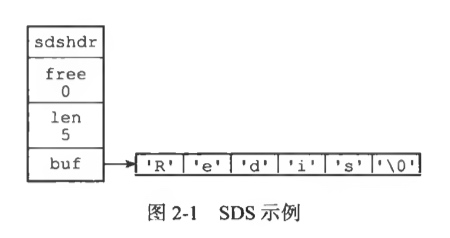
Redis没有直接使用C语言传统的字符串表示,而是自己构建了一种名为简单动态字符串SD S(simple dynamic string)的数据结构 ,并将SDS用作Redis的默认字符串表示。
Redis内部所有字符串都由SDS来表示,其本质就是动态字节数组,和python的bytearray类似。
SDS 实现
1
2
3
4
5
6
7
8
9
10
11
12
13
14
|
typedef char *sds;
struct sdshdr {
int len;
int free;
char buf[];
};
|
![]()
使用SDS时,一般是通过指向buf数组的指针而不是sdshdr,这样相关接口就和C字符串兼容。同时需要使用到len和free相关属性时,通过计算指针偏移来得到sdshdr指针,整体设计比较高效。
1
2
3
4
| static inline size_t sdslen(const sds s) {
struct sdshdr *sh = (void*)(s-(sizeof(struct sdshdr)));
return sh->len;
}
|
创建新SDS
创建比较简单,注意buf末尾的\0,以及最后返回的buf指针
1
2
3
4
5
6
7
8
9
10
11
12
13
14
15
16
17
18
19
20
21
22
23
| sds sdsnewlen(const void *init, size_t initlen) {
struct sdshdr *sh;
if (init) {
sh = zmalloc(sizeof(struct sdshdr)+initlen+1);
} else {
sh = zcalloc(sizeof(struct sdshdr)+initlen+1);
}
if (sh == NULL) return NULL;
sh->len = initlen;
sh->free = 0;
if (initlen && init)
memcpy(sh->buf, init, initlen);
sh->buf[initlen] = '\0';
return (char*)sh->buf;
}
|
容量调整
既然是动态数组,就会涉及到容量调整。
Redis的调整策略,当所需空间小于SDS_MAX_PREALLOC(当前版本是1MB)时是指数增长, 否则线性增长SDS_MAX_PREALLOC的大小。
1
2
3
4
5
6
7
8
9
10
11
12
13
14
15
16
17
18
19
20
21
22
23
24
25
| sds sdsMakeRoomFor(sds s, size_t addlen) {
struct sdshdr *sh, *newsh;
size_t free = sdsavail(s);
size_t len, newlen;
if (free >= addlen) return s;
len = sdslen(s);
sh = (void*) (s-(sizeof(struct sdshdr)));
newlen = (len+addlen);
if (newlen < SDS_MAX_PREALLOC)
newlen *= 2;
else
newlen += SDS_MAX_PREALLOC;
newsh = zrealloc(sh, sizeof(struct sdshdr)+newlen+1);
if (newsh == NULL) return NULL;
newsh->free = newlen - len;
return newsh->buf;
}
|
参考